Blog Details
Ready-to-Eat vs Ready-to-Cook Gravies: Which Is Right for Your Food Business?
Ready-to-Eat vs Ready-to-Cook Gravies: Which Is Right for Your Food Business?

December 22, 2025
172

Introduction

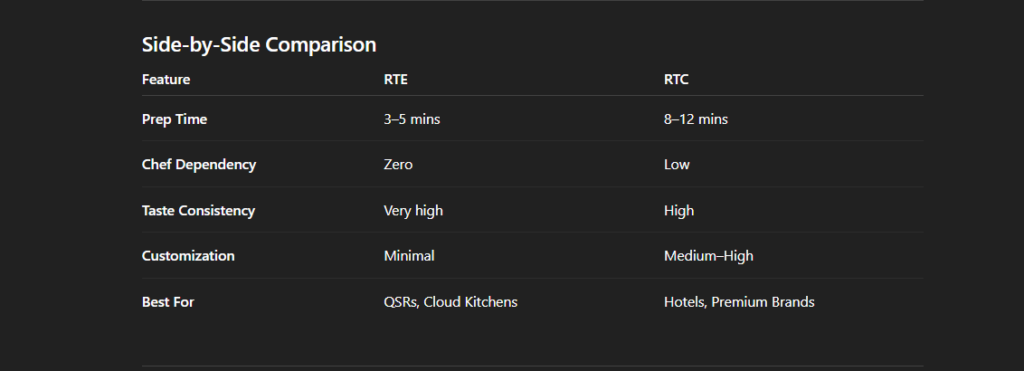
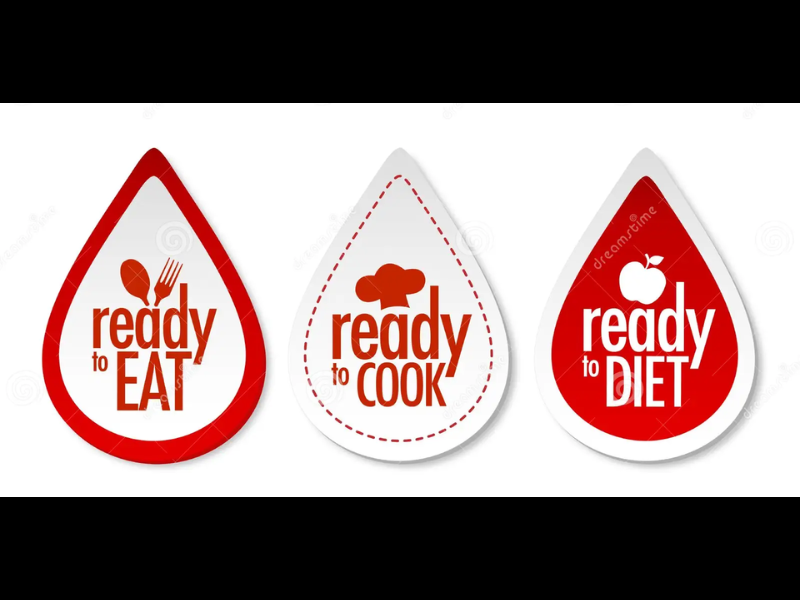
Restaurants and cloud kitchens often struggle to decide between RTE (Ready-to-Eat) and RTC (Ready-to-Cook) gravies. Both simplify operations but serve different purposes.
This blog breaks down the differences, benefits, and use-cases to help you pick the best fit.

What Are Ready-to-Eat (RTE) Gravies?

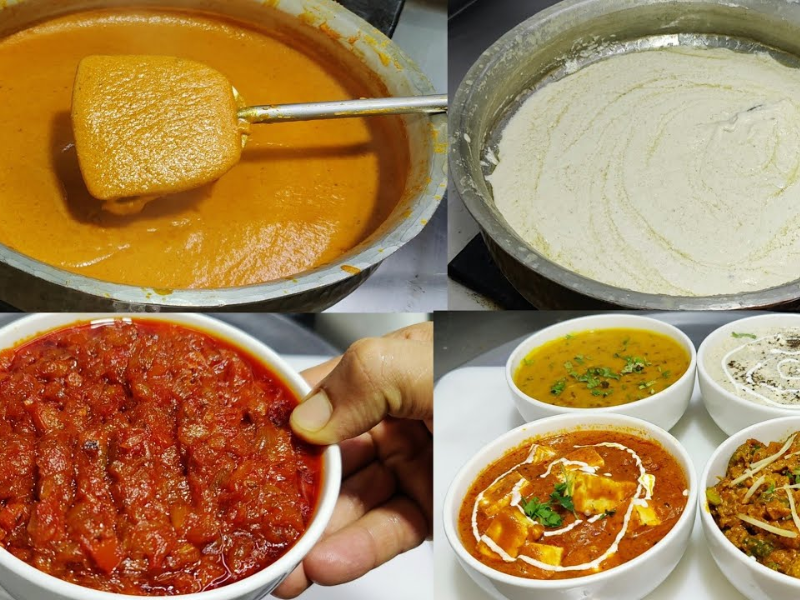
RTE gravies are fully cooked, seasoned, and ready to serve after heating.

Best for:

Advantages:

100% ready in minutes
No chefs required
No complexity or kitchen errors
Extremely consistent taste

What Are Ready-to-Cook (RTC) Gravies?

RTC gravies give you a standardized base with room for final touches. Chefs can add protein, spices, fresh herbs, or finishing cream as needed.

Best for:

Advantages:

Customizable
Faster than cooking from scratch
Allows brand-controlled differentiation
Reduces—not eliminates—chef dependency
  1. Consistency Across All Outlets
    Every batch tastes the same — critical for brands scaling from 1 to 100 outlets.
  2. Zero Dependence on Skilled Chefs
    No need for specialized gravymasters in every location. Anyone can heat and serve.
  3. Faster Service, Higher Throughput
    Preparation time drops from 45 minutes per gravy → 5–7 minutes.
  4. Long Shelf Life = Zero Wastage
    A shelf-stable product drastically reduces spoilage-related losses.
  5. Safe for Exports & Institutional Use
    Retort processing meets global standards including FSSAI, FDA, HACCP, FSSC 22000.

How No Chef Kitchen Helps You Choose

Our R&D team works with your cuisine, dish list, and outlet volume to suggest the right approach — or even a hybrid model.

We offer:

Fully customized RTE gravies

Standardized RTC bases

Biryani & pulao bases

Dal, lentil & regional curries

Conclusion

If you want speed and consistency — choose RTE.
If you want flexibility and brand identity — choose RTC.
Either way, you eliminate 70–80% of prep time and complexity.